Book reviews: a new take on Lady Macbeth, the return of Molly the maid, and more

Company by Shannon Sanders. 4/5
Company is a collection of stories connected by the members of one middle-class Black family in America. It’s about microaggressions and control issues, generational conflict, family relationships, and the culture of this particular family: how things are done, how hierarchies work, who capes for whom and why. Many of the stories end with humiliation or unhappiness; others simply capture moments of a life. Characters are well-drawn and filled out and Sanders has an excellent ear for dialogue and creating tension within it. It’s a great book for book clubs and in-depth discussion.

Hope Ablaze by Sarah Mughal Rana. 2/5
I thought I’d love this novel about a young Muslim woman who is secretly a poet. Her best friend enters her work into a contest without permission, and the repercussions are violent and horrific. But the characters were stock figures–the mother who doesn’t want to rock the boat and is scared for her daughter in the current racist and Islamophobic climate in the US, the gossipy auntie who is annoying as hell, the clueless White girl who just wants to help her friend, the beloved uncle in jail–and the poetry was just meh. The plot required some willing suspension of disbelief, which took me out of the book, and there was a lot of material that felt like filler. It’s a shame, because the premise is a good one.

Wild and Distant Seas by Tara Karr Roberts. 2/5
Imagine: the Ishmael of Moby Dick has a liaison with an innkeeper in Nantucket, and she has a daughter. That daughter has one too, and so on. This novel follows the lives of all of those daughters, who all have psychic powers of one kind or another, and who are, for reasons I cannot fathom and which are not provided very well by the author, desperate to find Ishmael. Apart from Ishmael’s daughter, who tries to seek out her father because it seems the thing to do, there’s no impetus for the others to continue the search. One of them does eventually find the woman with whom Ishmael fathered the first daughter, and we learn of the terrible consequences of some of the various offsprings’ mental powers. The characters remained rather flat for me, and despite the fact that most of them have become hardened from betrayals, rough conditions and erratic upbringings full of trauma, I don’t feel much sympathy for them or relate to them well.

King Nyx by Kirsten Bakis. 5/5
King Nyx is a dark, heavily gothic story of ghosts and automatons, murder and loss, desperation and denial, that imagines the life of Anna Fort, wife of the eccentric Charles Fort. In this novel, she travels with her husband to an isolated island where a mysterious millionaire has invited him to work for the winter. But the millionaire’s own strange dictates and wants force the couple into an odd and tense living situation with another couple, also invited to the island. Anna begins to hear and see things she can’t quite explain, but doesn’t always trust her own senses as her mental health has been fragile before. But things begin to come together until the secrets at the heart of the island are revealed in unexpected ways. The writing itself is mannered, reflecting the writing of the period, and the characters behave a bit unnaturally–but then again, it’s a gothic novel and that’s practically required. Anna’s desire to both support her husband (who researches anomalous events, like rains of frogs) and her urges to distance herself from his embarrassing beliefs create excellent dramatic tension, as does the questionably consensual BDSM activity of the other couple. It’s a fascinating novel with a lot of think about, and a compelling read.

Shakespeare in Bloomsbury by Marjorie Garber. 5/5
An excellent book on the role of Shakespeare and his works among the literary Bloomsbury Group–Virginia Woolf, Vanessa Bell, Lytton Strachey, and many others. Garber uses letters, drafts of works, and completed and published pieces by members of the Group to uncover the influence of Shakespeare, how the writers read and discussed his plays, and how they used his work in their own. Written for a general audience with interests in British literature, Shakespeare in Bloomsbury will find fans everywhere.

Julia by Sandra Newman. 3/5
At first, I was super excited about this book: 1984 retold, focusing on Julia. And I enjoyed reading it–it’s got some very clever things going on, and it’s very much worth reading and discussing. But the more I thought about it, the more I considered how Julia is also White, able-bodied, apparently conventionally attractive. She undergoes countless horrors, and yet, I kept thinking, what if this was a retelling of 1984 from the perspective of a woman of color, or a woman seeking to hide a disability from Big Brother? Newman brings in characters of color, very briefly, but I feel like there was a missed opportunity there to explore the lives of other women under the regime.

All Our Yesterdays by Joel H. Morris. 2/5
There are numerous novels that use the premise of telling Lady Macbeth’s story, and many of them tend to focus on her backstory, taking as inspiration her line “I have given suck, and know/How tender ’tis to love the babe that milks me.” Everyone seems to want to tell the story of her child, who is not present in the play. Authors also like connecting Lady M with the play’s witches, or non-play supernatural forces. All Our Yesterdays is no different. The future Lady M has an encounter with a witch and bears a child before Macbeth kills her husband. The author cites the “suffocating mother” trope in his notes, and her certainly draws on this idea for how Lady M treats her son before she meets Macbeth. After she does, though, she’s mostly an absent parent, and her son grows up confused, angry, and mostly unpleasant. Interestingly, the primary characters go unnamed: they are merely “the Lady” and “the Boy;” which dehumanizes and objectifies them, making them roles rather than characters perhaps this is deliberate? Morris’s spinning-out of how their collective and individual traumas affect them is well-done, and he creates other characters and interactions that propel the plot and character development in interesting ways. But as with all Lady M novels, I have to ask: why are people so fascinated by her motherhood and the absence of her child in the play? Are her motherhood and the presumed death of her child the only way to find humanity or even interest in her?

The Lost Tomb by Douglas Preston. 2/5
Preston (no relation) has done a lot of interesting writing on interesting topics, and this volume collects many of his articles for publications like Smithsonian magazine and National Geographic. It’s a shame that Preston didn’t revisit these in more detail and revise and update them, because he uses a lot of problematic language in regard to race, sex, gender, class, repatriation of Native remains, and other things, and his brief comments at the end of each essay don’t follow up on the topics very well. Overall, this is a disappointment.

The Only Black Girl in the Room by Alex Travis. 3/5
This novel spells out for (mostly white) audiences what racist microaggressions and discrimination looks like: it’s overt, it’s institutional and systemic, it’s present in everyday life and work. I found the writing to be heavy-handed about this, but then I realized that it had to be for readers who have never thought about it or are oblivious to it. There’s also a story of redemption and romance, and this arc is also laid on thick, maybe, again, for readers who wouldn’t pick up on more subtle writing. Overall the book is a fine read and one that should provoke a lot of good discussions and thought.

Jesus Christ Superstar by Ellis Nassour. 1/5
I was looking forward to reading about the inception and reception of JCS, a musical I first encountered through the concept album. But this book is so fraught with cringe-worthy incorrect uses of musical terms, inconsistencies and contradictions, and unsupported claims that it’s painful to read. The prose is heavy-handed and gushing, the details often foggy, and the emphasis on certain subjects–Tim Rice’s apparently endless pursuit of women, for example–is unbalancing and, to be honest, kind of creepy. While author Nassour had considerable and unique access with the creation of the show in a professional capacity, he comes across here like an uncritical fan in awe of Rice and Lloyd Webber. Musicians will be turned off by Nassour’s egregious errors in writing about music, while fans will be frustrated with the poor overall writing and attempts to be dramatic, as well as the casual sexism. It’s a shame, really, because the musical deserves better work on its history.

The Mystery Guest by Nita Prose. 5/5
This is an absolutely delightful new book featuring the characters from The Maid, one of my favorite books. It’s a sequel,of sorts, but you don’t have to have read the previous novel to enjoy it. Once again, a murder has taken place in the posh hotel where Molly Gray, now Head Maid, works. Molly narrates two stories: that of the murder and her involvement in the investigation of it, and of her childhood, when she met the murder victim. Molly’s unique perspective and skills help catch the killer, and it’s a joy to ride along in her brain for the whole thing. In addition to this being an excellent whodunit, it’s one of the few truly great representations of an autistic character in mainstream fiction, and as an autistic person, I am grateful to author Prose for it.

Murder by Lamplight by Patrice Mcdonough. 1/5
A Victorian mystery with a class-based focus and an American-trained woman doctor, but alas, not particularly original or interesting. I kept waiting for something complex and for characters to develop or become interesting, but it never happened. The characters were two-dimensional and stereotypes that could have come out of a typical mystery written in the 30s and went over with me about as well as racist Agatha Christie novels.

The Warm Hands of Ghosts by Katherine Arden. 5/5
The First World War always makes me angry and upset, and author Arden feels the same way. In this beautifully-written novel, she weaves together numerous aspects of the war to create a rich novel about loss and acceptance and recovery. She uses the folklore of the trenches, the experiences of nurses and volunteers, the horrific practices of executing so-called cowards and deserters, the mental and physical traumas of the war, and the contrasting lives of those who waited for news from afar to tell a story that is immediate and compelling and all-engrossing. Troops talk of a mysterious “Fiddler,” who gives soldiers a night of hauntingly beautiful music in a dazzling and warm hotel, only to never be found again. (I have to think he is related to Bulgakov’s Woland.) When a nurse’s brother falls into the Fiddler’s hands, she rejoins a nursing unit in order to find him. Her journey and companions are unexpected and compelling. Highly recommended.

Rebecca, Not Becky by Christine Platt; Catherine Wigginton Greene. 1/5
I had to force myself to finish this. Lots of telling rather than showing, constant brand-name dropping, loads of slang that may or may not date well. The characters are all conceited, passive-aggressive, and unpleasant. They’re also not real characters, but two-dimensional stereotypes that think and talk in ways and phrases that are so tired they should be dead. Give this one a miss.

A History of the Cotton Industry by Anthony Burton. 1/5
This is a classist, elitist, racist, and misogynist text when it was first published, and it remains so. Didn’t the editors read it before reprinting it? I mean, just in the first pages there’s a terrible and not well-considered defense of using the n-word, followed by the idea that cottage industry piece workers had luxurious lives because they could just work whenever they felt like it or needed the money. Amazing. Can I give it 0 stars, please?

Radio Free Olympia by Jeffrey Dunn. 1/5
Absolutely 100% not for me. The Author’s Note at the beginning was enormously off-putting, and despite some of the original and interesting language in the rest of the book, other, often crass, parts of the writing kept pushing me out of the story. The book feels very self-indulgent on the writer’s part without regard for or reward for the reader.

The Djinn Waits a Hundred Years by Shubnum Khan. 5/5
I feel like this book was written for me: a lovesick djinn, a hidden room, a sentient house, mysteries upon mysteries about its current and prior inhabitants, a vicious ghost? I’m there. There are multiple stories layered upon one another–literally, in some instances–in this lovely novel about grief and loneliness and compassion. One is a romance turned horror story; another is a traumatized girl’s exorcism of her sister’s ghost (who may or may not be real, depending on how you read); a third is that of warring women; all with smaller stories within. Now I want to know where the djinn went next, and where Sana and her father ended up, and what they’re all doing now.
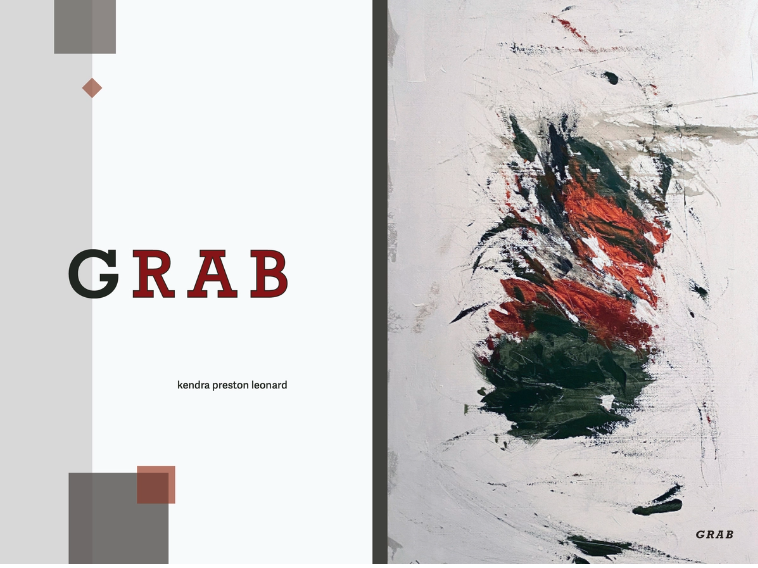
Happy book birthday to GRAB!

Grab, my collection of dark fantasy and horror poetry, is out today from Red Ogre Review! Sponsored by a grant from the Science Fiction & Fantasy Writers Association, it contains werewolf drama, eldritch entertainments for royalty, a guided tour of dangerous and fantastical labyrinths, spells for snow, far-seeing, and playing the cello, a Ukrainian love story, and unexpected haiku. Come dance on skulls, see the Erlking stopped in his tracks, and find out how a baby gets raised in a house of witches.

The cover of Grab. On the back cover, letters in black and red spell out "grab" and my name. On the front is a painting by Sara Maino, a flurry of brushstrokes in black and red and grey.

The outstanding cover art is by Sara Maino. What do you see in it–a reflection, the tracks of an unknown monster, or perhaps a tricky fox disappearing before your eyes?

Buy a copy here, and, if you can, buy a second one to donate to your local public or school library. If you donate one or more copies, email Matt Bullen, editor-in-chief of Red Ogre Review, at info@ogre.red and let him know, and he’ll add your name to the list of sponsors. Email me as well at kendraleonard@pm.me and I’ll send you a personalized and signed bookplate!


Book reviews: System Collapse, the new Naomi Alderman, and great graphic novels

Ghosts, Monsters and Demons of India by Rakesh Khanna; J. Furcifer Bhairav. 5/5
This is an excellent and fun guide to ghosts, monsters, and demons of India, complete with chatty definitions and stories, variant lore, and much more. It’s great to dip in and out and learn something new, and reading it cover-co-cover was a pleasure. It’s a great resource for writers as well as those reading Indian and Southeast Asian SFFH who want to learn more about the supernatural dwellers of that area.

The Long Fall Up by William Ledbetter. 3/5
Although author Ledbetter takes on some very current issues like bodily autonomy, human trafficking, and other topics, these stories are written in a classic sci-fi style and tone–they’d be right at home in a collection that also included Arthur C. Clarke and Isaac Asimov. Don’t get me wrong, most of the stories are well-written and interesting, but they do feel dated, a little over-long, a little circuitous and slow. So if classic sci-fi is your thing, you’ll enjoy a lot of this.

Last to Leave the Room by Caitlin Starling. 4/5
This is an enormously disturbing and excellent horror story about the limitations and ethics of technology, what self-hood is and how it can be manipulated, and the role of private institutions in the public sector, a very real and growing concern. Starling deftly weaves all of these together in the story of Tamsin, a scientist tasked with uncovering potential problems her company has created with its research and projects. She’s on top of it all until her own house begins to exhibit changes seen elsewhere in the city–but at a much faster rate. Then her basement grows a door, and her doppelgänger comes through it. There’s a fair amount of gore and death as well as emotional and psychological abuse. I felt quite bad for the doppelgänger cat.

Nordic Visions: The Best of Nordic Speculative Fiction ed. by John Ajvide Lindqvist; Maria Haskins; Karin Tidbeck. 5/5
This is a good collection of horror, sci-fi, and fantasy from Scandinavia. Including pieces both written in English and translated into it, the collection represents a lot–but not all, as the editors discuss in their introduction–of places within Scandinavia. There are fantastic tales inspired by folklore as well as stories about aliens, robots, dystopias, elves, and much more. I’d love to re-read these in a class or group where I could learn more about the contexts in which the writers are working.

Curious Tides by Pascale Lacelle. 1/5
This is a mess. It’s your typical mostly-elite students at magic college, except they mostly act like high-schoolers or even younger. You’ve got the poor, not-very-smart Chosen One, who has lots of determination but can’t think for herself; the Hot Boy, who is, like most Hot Boys in Magic School fiction, also an asshole; the Overlooked Boy, who is wracked with trauma; the Officious Teachers, who are, you know, officious; the One Nonbinary Person; and many more. Although it’s set at a school, no one seems to actually go to classes much or do any work; there’s Big Evil afoot in an institution nearby; there’s a Mystery About a Book; there are shunned classes of people, a weird blend of technology and magic, and lots of Talking Like Jan Austen Characters. Everyone seems to be queer, which is cool, but the chemistry and romance parts are so badly written that I feel bad for the author and the characters. And there are So Many Clichés. Every chapter, apparently, has to end with one, and of course the end of the book is a cliffhanger, although by that point I really could not take much more Fancy Ritual Speaking and any of the characters. There’s loads more I could complain about, but instead I will tell you just not to waste your time. Want good magic school stuff? Try Dinana Wynne Jones or Lev Grossman or, I don’t know, loads of other things as long as they’re not by terrible transphobe.

anOther Mythology by Maxwell I. Gold. 3/5
Maxwell I. Gold queers familiar Greek myths in this book of poetry and short prose. There’s a lot to like: placing the myths in an intersectional framework, Gold is able to create new takes on old tales, spin ideas and words into modern contexts, and offer clever interpretations. There were also a few times when the writing felt lazy and superficial, and having read what Gold could do, those spots were disappointing. But overall this is a nice entry into the re-tellings and sequels category for myth, which seems to be a perennial reader favorite.

Night Watch by Jayne Anne Phillips. 3/5
Night Watch is the complex story of rape, PTSD, and the state of psychiatric medicine in the United States after the Civil War. Eliza and her daughter ConaLee seemingly lose their husband and father to the War, and when a stranger attacks them and repeatedly rapes Eliza she becomes pregnant–and mute. The rapist takes Eliza and ConaLee to a hospital for the mentally ill, such as there was at this point in time, where they pose as a wealthy woman and her servant. Once there, Eliza begins to grapple with her trauma–in part by repressing much of it–and ConaLee makes discoveries about the institution and the others who reside there. There’s a happy ending of sorts, and a comeuppance for the rapist. but I can’t say that it was entirely satisfying. This will probably do very well with book clubs.

Her Radiant Curse by Elizabeth Lim. 4/5
Her Radiant Curse is a solid adventure story with good characters and character development, excellent fights and flights, kick-ass sisters watching out for each other, and a satisfying end. Magic, witches, and talking animals help bring down patriarchal establishments and help the women of the book forge new paths. This is a prequel to two other books by Lim, but can be read before or after them, and stands alone just fine.

A Sweet Sting of Salt by Rose Sutherland. 4/5
This is a selkie story with a lovely change in which the selkie falls in love with a human woman, who then goes all-out to rescue the selkie from her cruel husband. A lot of selkie stories hinge on the moment someone figures out what they are, and it’s true that I felt like I was being needlessly burdened by knowing all along what the selkie was before her lover sussed it out, but that’s a traditional part of selkie stories. While I was waiting a little impatiently for this reveal, though, I was charmed by the variety of characters and their intertwined lives, and especially the resilience of all of the women. For any woman who’s been in a controlling relationship and has survived, this book may be difficult to read, but at the same time it also offers a wonderful happy ending, the kind we all deserve.

Normal Rules Don’t Apply by Kate Atkinson. 3/5
This collection of linked stories is a nice introduction to Kate Atkinson’s more experimental side, as the normal rules–about time, about death, about multiverses–really don’t apply. A lot of the stories are melancholy; some are funny; some are both. While I didn’t love it the way I love some of her books, I enjoyed it, and I think book clubs might really get into it.

The Golden Voice: The Ballad of Cambodian Rock’s Lost Queen by Gregory Cahill. 1/5
One of the things that keeps this book from being particularly good is that the authors take too many liberties with the timeline, and that characters aren’t introduced well, their motives and relationships aren’t clearly delineated, and their stories aren’t clearly told. At the end of the book, the authors offer a Fact Vs Fiction list of what they changed to supposedly give the book more drama, but all it does is dilute the story of Ros Serey Sothea; on that note, why isn’t her name in the title? Anyway, the book fails her and its readers on multiple levels.

Paris by Andi Watson & Simon Gane. 3/5
In this graphic novel, a young American woman in art school in Paris makes money by painting portraits of the rich. She falls in love with one of her portrait sitters, but circumstances pull them apart until the sitter tracks down the painter. THere’s a happily-ever-after where the two return to Paris to live out their dream lives together. Neither the story nor the artwork did much for me, but others might enjoy the happy ending.

Carole by Clément C. Fabre. 5/5
Carole is a sweet and thoughtful memoir about two brothers’ quest to find the grave of their mother’s older sister, who died as an infant. As they search, they discover their family’s history, contemplate identity, and try to understand the complexities of the lives their maternal grandparents had as Armenians living in Istanbul. This is a lovely book about family and heritage, and I recommend it highly.

The Imposition of Unnecessary Obstacles by Malka Older. 5/5
This is a cozy-up-to-a-fire book that I just loved. A mystery and a romance set on (or around) Jupiter, it’s the second of a series (I need to go read the first) in which two women–who are negotiating their relationship on a very, very micro level–work together to investigate problems at a prestigious university. There’s storyboarding and hot tea and warm bathrobes and cuddling and missing people and secrets all around and it’s a delicious, satisfying read, and you don’t need to have read the first one to understand anything.

Joanna Russ: Novels & Stories (LOA #373) by Joanna Russ. 3/5
These works of Russ, while important, just don’t hold up well. They are often tedious, despite the interesting ideas that undergird them, long and in need of trimming. But they are of a period and they represent the 1970s well in terms of SFF and queer writing, and will be of use to scholars and folks who enjoy this kind of writing more than I do.

The Corset & the Jellyfish: A Conundrum of Drabbles by Nick Bantock. 2/5
Like many others, I read Bantock’s Griffin and Sabine books with some pleasure, mostly because I wasn’t really thinking too hard when I was reading them. But the shine has gone off; this newest book, a collection of “drabbles,” or 100-word stories, while full of references to a wide variety of other literature and beautiful language and pretty words strung together, is also full of the male gaze, objectifying women. It gets pretty gross. In addition, I don’t love the conceit: the author found a manuscript, but it’s out of order, Can readers figure out the intended order, and is there a hidden message? This kind of presentation is often–and certainly is, in this case–an author trying to prove how smart they are, and telling their readers that they have to work harder to figure out what the author actually means to say.

Gin, Turpentine, Pennyroyal, Rue by Christine Higdon. 3/5
There’s a lot to like about this novel, some of it right from the beginning and some of it that had to grow on me, like the narrating dog. Of course the central topic is abortion, and the author does a great job of spinning up all of the webs and networks of thought and fact and history about abortion in the early 20th century. The characters, though, we not evenly developed, and some of their thoughts and actions seemed rather arbitrary because of this: Flore, the firebrand radical, never seems to do much that is actually radical, and she lives off her dad’s money; Llew, the cop who also runs whiskey is also a bit of a flat character, and–spoiler alert–the only reason he runs whiskey is so that the author can kill him off easily near the end. Ahmie has more of a personality in the epilogue than the entire rest of the book, and killing off Morag in the epilogue just feels weird–what does her death serve, from a literary perspective, other than to tell readers that her child has been taken by her estranged in-laws…and what does that do, other than set up a sequel, maybe? It felt pointless. I’d love to send this back for one more round of edits.

Anecdotes by Kathryn Mockler. 2/5
Author Mockler recounts her horrific childhood and young adult years in a series of, as the title says, “anecdotes.” Taken as a whole, it’s a damning indictment of the systems that are supposed to keep children safe, including family, teachers, and others. That said, I don’t understand the hype for the writing, which I found kind of lacking impetus and life.

Tales From Nottingham by David Hazan. 1/5
Not for me, I’m afraid–lots of telling rather than showing, exoticist tropes, fan-service (god, the male gaze in this book–ugh), grotesquerie, and graphic violence. Not so much tales as just solving problems with swords.

Octavia E. Butler: The Last Interview by Octavia E. Butler, Samuel R. Delany. 5/5
This volume is a great collection of interviews with Butler, looking at her life, her upbringing, specific books, and her career overall. Fans of her work will find the interviews here insightful and useful, and scholars of Butler’s work will find this invaluable.

The Witches of Bone Hill by Ava Morgyn. 2/5
In this variation on the “people inherit a spooky house, now spooky things happen” trope, there’s just a little too much going on. Not the spooky stuff–it’s fine if a little overbaked (White lady witches strike again) and reused from other books–but some of the rest has got to go. The divorce was bad enough, because there’s a lot of what feels very forced writing on it, but to have a mafia subplot? Why? It’s totally unnecessary and in fact takes the reader out of the spooky atmosphere Morgyn is trying to create all the rest of the time. It’s just a mess. Someone go edit this before it gets out into the wild.

This Country by Navied Mahdavian. 5/5
A lovely and sad meditation on life in rural America, where you never know if your neighbor will help you cut up firewood, call you a racist slur, or do both at once. Mahdavian chronicles his encounters with nature and racism and White supremacy and becoming a farmer and thinking about Land Back and trying to become a father with honesty and clarity, in this admirable memoir.

Alebrijes by Donna Barba Higuera. 1/5
In post-apocalyptic Mexico, the elite live well and the poor starve. And sometimes they’re just killed outright. Young Leandro agrees to take part in a risky project in order to save his little sister: his consciousness is transferred into a hummingbird robot. There follow many adventures in which Leandro isn’t very smart, followed by someone saving him. He finally gets back into his body, fights the elite baddies, and he and his sister leave for a place where things actually grow in the ground and apparently it’s utopia. I felt like I was in a video game, and I did not enjoy it much. Like a lot of other male leads in fantasy series, Leandro isn’t actually the hero. He’s an inept dude who has to be saved time and again. This means the reader has to keep reading the POV of a character who, were they to encounter them in a movie, would be yelling at the screen: NO DON’T GO THERE and DUH DRINK THE WATER. Sigh.

The Fox Wife by Yangsze Choo. 5/5
This is the fox novel I’ve always wanted to read. Choo’s structuring and execution of this book is extraordinary, elegant, and a joy to read. Here, humans and foxes are thrown together in unpredictable ways, and most of the characters are in mourning for something, complicating their emotions and actions. Snow’s narrative voice is sublime, and the development of Bao and Tagtaa–and the slow uncovering of other characters’ identities–is an enormous pleasure to see unfold. Choo’s mix of myth and her own additions to lore are delightful. I love this book.

Watership Down by Richard Adams. 5/5
This is a lovely and beautifully-condensed graphic treatment of Richard Adams’s beloved novel. There was beauty on every page–the art was just perfect in approach and texture and color for the stories being told. There is tragedy and sacrifice and all of the pathos and suspense and politicking of the novel, but perfect for younger readers or people who just didn’t get into the novel, and for anyone who was traumatized by that 80s movie adaptation, because it is a balm for your soul.

The Tainted Cup by Robert Jackson Bennett. 5/5
The Tainted Cup is an absolutely stellar novel. The world-building is wonderful and deep and the world is just alien enough and astonishing in its detail and originality; the characters are fascinating; the plot is superb, and I loved every minute reading this. I’m recommending it to all my friends and followers and am about to read it again myself. Gorgeous and stunning and brilliant.

Sheets, Delicates, and Lights by Brenna Thummler. 5/5
I loved this enormously sweet story of a family affected by grief and a ghost for whom no one has grieved. I want to give the entire trilogy–Sheets, Delicates, and Lights–to every elementary or middle-school kid I know who’s every had a hard time. The characters are real and affecting, and the overarching messages about needing friends and being tolerant and realizing that life is hard and so you have to try hard, sometimes, to get though it, is told in a sympathetic way.

The Innocent Sleep by Seanan McGuire. 3/5
The Innocent Sleep tells the same story as the previous book in McGuire’s October Daye series from the point of view of Tybalt, King of Cats and Toby’s husband. I love how McGuire has done this, telling the story we didn’t get from October’s first-person POV in the previous book. That said, it feels a bit overlong and padded. While McGuire’s written a number of short stories and novellas from POVs other than Toby’s, they are never quite as good: they just don’t have the unique, individual voices they need to carry things, and this is true here. Tybalt’s voice is often undifferentiated and uneven, and there’s what writing teachers like to call “telling, not showing”–which makes the reading interesting and compelling.

A Haunting in Hialeah Gardens by Raul Palma. 3/5
An elliptical, slow-burn kind of novel, in which a santero who doesn’t believe is forced to exorcize demons including his guilt in the death of his wife, capitalism and debt, and supernatural powers that have followed him from his home in Bolivia to Miami. Palma writes compellingly about human behavior, the nature of belief, and the role of place in creating a sense of self. The hauntings are powerfully created and written, and the world of the book is created with care and great details, but it left me a little cold. The protagonist is a complex character, but also such a jerk that I didn’t care; nor was his wife sympathetic or interesting. Other characters–like his boss, Lourdes, could have benefitted from more of a fleshing-out. A mixed bag.

Night Side of the River by Jeanette Winterson. 1/5
This collection of ghost stories and personal anecdotes by Winterson was a disappointment–the stories weren’t very original or compelling, although the personal anecdotes were more interesting than the fictional pieces. Winterson notes some of her influences, and they are very, very obvious, to the point of rewriting older works like those by M. R. James.

Organ Meats by K-Ming Chang. 2/5
Anita is a young bully and abuser. Her friend Rainie lets her get away with it. They both suffer. This, coupled with an obsession with stray dogs (who may or may not be women) and excrement, is the TL;DR of this book. While the elements of magic and magical realism are interesting, there’s just honestly too much abuse and shit in this book for me. Is the point that women are dehumanized? That abusers start young? That if we get lost in dreams, the real world vanishes for us, and we from it? Maybe all of these things, but despite some incredibly original writing, I can’t really recommend it.

The Future by Naomi Alderman. 5/5
A perfectly-timed novel about what happens when tech dudes (mostly dudes, anyway) are evil and smart people get together to stop them. This is a smart novel about non-male power, about relationships, about different ways of creating the future. I hope it inspires hackers and tech workers everywhere to find ways of making things better for everyone.

Black Caesars and Foxy Cleopatras by Odie Henderson. 5/5
This is a great account of Blaxploitation films of the 1960s and 70s. I love Odie Henderson’s personal and very deep takes on his top (and the most important–not always the same!) movies, the tropes, the actors, and producers for a huge swath of Black pop culture. This is a total joyride through the movies, their connections, and catchphrases. It’s also an astute and thoughtful analysis of Black movie culture, as well as music, comedy, and more. Go read it, then watch some of the movies, if you haven’t seen them already, and consider watching Eddie Murphy’s recent *Dolemite Is My Name,* a fantastic biopic of Rudy Ray Moore, one of the filmmakers discussed in the book. You’re in for a great time.

The Saint of Bright Doors by Vajra Chandrasekera. 1/5
The offspring of various messiahs, not chosen to follow in their parents’ paths, find themselves involved in messiah-related research, art, and politics. I didn’t really enjoy this, and I think that if I hadn’t been reading it in order to review it, I wouldn’t have finished it. There are interesting ideas, but they weren’t always well developed, and the characters weren’t interesting, although some of them were better-developed than the ideas. I know this is getting rave reviews, but I can’t add mine to them–I was mostly bored.

Beast Mom by Kim Imas. 4/5
Oh, this is a total romp for every person–not just woman or mom–who has been infuriated by misogyny, racism, classism, ageism, and/or being taken for granted. In the world of the novel, placental tissue has morphed, evolved, changed, and given parents in a one town super powers. Harry Lime, mother of three, becomes an enormous, ape-like creature when enraged by the local White men on the school board, and as she learns to control her power, she finds that she’s not alone–others have gotten powers too–all of them different. Followed and watched by governmental officials, a violent men’s-rights group, and having to deal with her husband’s and her own depression, the grooming of her daughter and her daughter’s friends by a coach, and her younger kids’ pre-school’s passive-aggressive lunches policies, Harry and her friends make plans to stop the groomer and the men’s-rights group while keeping their powers a secret. Although I do wish there’d been recognition that transmen and nonbinary people can have children and thus have placentas also, this book is for anyone who has wanted revenge–or at least some justice–served-up superhero style.

Our Divine Mischief by Hanna Howard. 1/5
This book contains the laziest excuse for world-building I’ve ever read, not to mention the super-obvious plot. It’s set in a fictional Scotland, where the author’s not-even-remotely-original ideas include turning the name prefix “Mac” into “Lac” and respelling city names–lie from Edinburgh to Ellisburgh. Really? The love triangle is never believable, the baddies far too obvious, and the timeline way too compressed and rushed for anyone to buy. The characters are stereotypes and the dog is just as poorly developed as the humans and gods. There’s also a compulsory capitalist society and pro-capitalist vibe and patriarchal heteronormativity.

System Collapse by Martha Wells. 5/5
Murderbot fans, rejoice! System Collapse pick up right where the last book ended, with our favorite SecUnit and team on a planet home to several factions of a colony and a corporation group intent on taking them all for enslaved labor. The team makes plans, things get complicated, more plans are made and abandoned until finally things come together–at least partially. And that’s not taking into account a surprise appearance from Murderbot’s memory–it’s flesh memory. Go read it–it’s an exciting, sarcastic, wonderful read that ends with a decision on Murderbot’s part that promises new adventures.